What Specialty Coffee Actually Means (And Why It Matters)
You're standing in front of a coffee shelf or scrolling through a roastery's website, and the word "specialty" is everywhere. It's on the bag, in the product description, maybe even in the brand name. After a while, it starts to sound like a marketing adjective, something that means "we think this is good coffee" rather than anything you can verify. The good news is that the specialty coffee meaning is not a vibe or a lifestyle label. It's a formally defined quality standard with a specific score threshold, a professional grading process, and real limits on what qualifies and what doesn't.
Understanding the specialty coffee definition helps you cut through the marketing noise and know exactly what you're buying. By the end of this article, you'll know the definition, the scoring system, who does the grading, why sourcing matters, what drives the price, and how to buy with confidence.
Specialty Coffee Meaning: The Official Definition and SCA Standards
What the SCA says in plain English
The Specialty Coffee Association defines specialty coffee as "a coffee or coffee experience recognized for its distinctive attributes, and because of these attributes, it has significant extra value in the marketplace." That phrase "distinctive attributes" translates to real sensory qualities: clean aroma, flavor clarity, natural sweetness, balanced acidity, and the absence of defects in the cup. These aren't impressionistic descriptions; they're the specific categories evaluated during a formal cupping session.
This specialty coffee definition matters because it's not a claim any roastery can self-apply without basis. The classification is grounded in a structured evaluation process with published criteria. If a roastery is calling its coffee specialty-grade without any grading data to support it, that's marketing language, not a standard.
How the 80-point threshold became the industry line
Specialty-grade coffee must score 80 points or higher on the SCA's 100-point cupping scale. The score is calculated by adding up individual evaluations across sensory attributes, so it's not a rough estimate or a gut feel. Anything scoring below 80 is classified as commercial or commodity grade, regardless of how premium the packaging looks or how carefully worded the product copy is.
Green coffee (the unroasted beans) also has to pass defect limits before the lot qualifies. Under SCA standards, zero primary defects are allowed, and secondary defects are capped at five within a 350-gram sample. A high cupping score can still be disqualified if the green coffee fails this inspection. The standard applies at two stages, not one.
What specialty coffee is not
Specialty-grade coffee is not automatically light roast, single-origin, or sold in kraft paper bags with minimalist design. Plenty of coffees come dressed in premium aesthetics but don't meet the scoring threshold. Conversely, a coffee can be specialty-grade and roasted medium-dark, or blended from multiple origins. The grade is determined by a trained evaluator scoring the green coffee sample and the brewed cup; the bag design has no bearing on it.
How the 100-Point Scoring System Actually Works
The cupping categories that build the final score
The SCA cupping form scores 11 attributes. Seven sensory categories are each scored out of 10: fragrance/aroma (evaluated as a single combined category), flavor, aftertaste, acidity, body, balance, and overall impression. Three consistency categories, uniformity, clean cup, and sweetness, each contribute up to 10 points based on five individual cups evaluated per sample. Defects are then subtracted from the total. Think of it like a restaurant critic scoring a dish across individual components rather than assigning a single number from instinct. Because scores are recorded in small increments, the difference between an 83 and an 85 is real and measurable, not arbitrary, which is why published cupping scores from trained evaluators are worth paying attention to when you're choosing a coffee.
What the score bands really tell you
The scoring bands break down into practical categories: 80 to 84.99 is "very good" and meets the specialty standard; 85 to 89.99 is "excellent"; and 90 or above is considered outstanding. Many roasters' offerings frequently fall in the low- to mid-80s, which is genuinely better than anything commodity-grade, even if it's not a rare 90-plus microlot. Those 90-plus coffees exist, but they're exceptional lots from specific harvests, not the everyday baseline you'd expect in a subscription bag.
Why defects matter as much as the score
A strong cupping score doesn't override a failed green coffee inspection. Primary defects include things like black beans, sour beans, and foreign matter. They're the most penalizing category, and even one of them disqualifies a lot from specialty classification. Secondary defects (like broken beans or slight insect damage) are allowed in small quantities, but there's a hard cap. This is why careful farming, harvesting, and processing directly affect whether a coffee ever qualifies as specialty-grade before it even reaches a roastery.
Q Graders: The Certified Tasters Behind the Score
Who Q graders are and how they get certified
Q graders are professional coffee evaluators who earn their certification through a rigorous credentialing program administered by the Coffee Quality Institute (CQI). The Q Grader pathway involves a 6-day course with nine total assessments: eight practical evaluations and one written exam. Candidates are tested on cupping calibration, triangulation tests, aroma identification, green coffee grading, and roast evaluation. Certification lapses after three years and requires recalibration to remain active. The parallel to a wine sommelier exam is fair: it's a legitimate credential built on demonstrated competency, not a self-appointed title.
What Q graders actually do during evaluation
During a formal cupping, Q graders evaluate brewed coffee samples blind, scoring each sensory attribute using the standardized SCA form. They also inspect green coffee for defects separately. Their value to the industry is consistency: they apply the same criteria and the same scoring language across different origins, producers, and roasters, creating a shared quality baseline that makes scores comparable across the supply chain.
Why Q grader scores matter to buyers
When a roastery publishes a Q grader score for a lot, that's a verifiable data point, not an editorial opinion. It's one of the clearest indicators that a coffee has been formally evaluated against the specialty standard rather than just labeled specialty for appeal. Traceable, relationship-sourced coffees from specific farms often come with published scores precisely because the producer and roaster want buyers to see the evidence. When you're shopping for specialty coffee, a roastery that shares this information is showing you something real.
Sourcing, Processing, and Traceability: Where the Real Difference Lives
How specialty coffee is farmed and picked differently
Specialty-grade lots are almost always hand-picked at peak cherry ripeness. Strip-picking and machine harvesting bring in cherries at mixed stages of maturity, which introduces inconsistency and defects that make it significantly harder to score above the 80-point threshold. The labor-intensive selectivity required at harvest is one reason relatively few coffees ever qualify. Growing regions such as Guatemala and Nicaragua are well-regarded for high-quality lots, thanks in part to high altitudes, dedicated smallholder farmers, and favorable climate conditions.
Processing methods and why they shape flavor
After picking, the processing method determines how the coffee develops. Washed, natural, and honey processes each affect how the cherry's sugars and fermentation influence the final cup. Specialty-grade processing involves controlled fermentation timing, careful drying (often on raised beds with regular turning), and rigorous sorting to remove defect-prone beans before they travel further in the supply chain. Commodity coffee shortcuts or skips most of these steps in favor of volume and speed.
Traceability as a quality signal
Specialty coffee is traceable. You can often identify the farm, cooperative, processing mill, and specific lot. Commodity coffee is almost always anonymous: blended from multiple undisclosed sources and traded on price benchmarks rather than quality distinctions. When a roastery can tell you the farmer's name, the elevation, and the harvest date, that traceability is both a quality indicator and an ethical one. It means the producer's work is being recognized and compensated, not obscured inside a bulk blend.
Why Specialty Coffee Costs More, and What That Price Actually Covers
Specialty coffee typically retails at roughly four times the price of commercial supermarket coffee. As of 2026, the average U.S. retail price for specialty coffee sits around $35 to $36 per pound, compared to roughly $9 to $10 per pound for commercial supermarket coffee, according to SCA market data. That gap has real causes at every stage of the supply chain.
Farmers who produce specialty-grade lots receive significantly more per pound than the commodity market price because the quality justifies a different pricing structure. Add labor-intensive harvesting and processing, smaller-volume logistics, and tighter quality control at each stage, and the cost of goods is genuinely higher before a roastery even touches the beans. Small-batch roasters then invest further in roast profile development, consistent equipment calibration, roast-date freshness management, and proper packaging with degassing valves and sealed bags built for short inventory turnover. These aren't cosmetic choices; they directly affect the cup quality you experience at home.
The honest summary: the premium covers more equitable farmer pay, more controlled production at origin, fresher roasting and delivery, and a more traceable supply chain. For most specialty drinkers, once they taste the difference, the price conversation shifts quickly.
How to Spot and Buy Genuine Specialty Coffee with Confidence
Labels and signals worth trusting
When you're looking at a bag, focus on a few specific indicators. A published roast date (not just a "best by" date) tells you the roastery takes freshness seriously. Origin specificity, naming the country, region, farm, or cooperative, signals that the coffee is traceable and likely evaluated on its own merits. A published cupping score or reference to Q grader evaluation is the strongest consumer-facing quality signal for cup quality when accompanied by transparent lot information. Certifications like Organic, Fair Trade, or Rainforest Alliance are valuable for what they verify (farming practices and trade ethics), but they don't confirm cup quality on their own. A coffee can hold all three and still score below 80 points.
What to look for in a specialty roastery
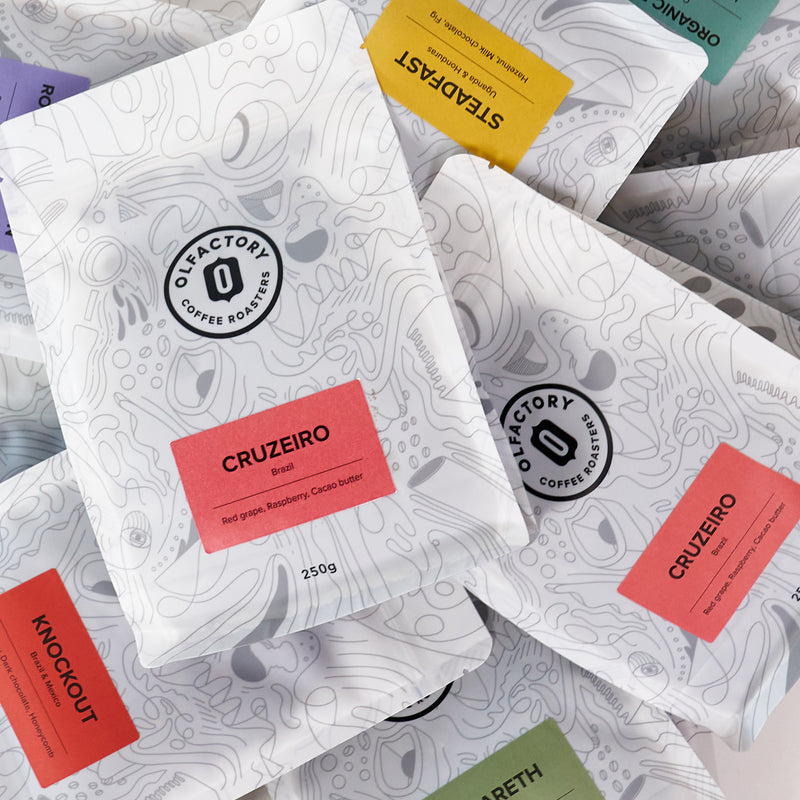
A genuine specialty roastery roasts in small batches, ships coffee fresh within days of roasting, and rotates offerings seasonally to reflect what's tasting best at any given time. Look for roasters that source directly from farms and cooperatives in well-regarded growing regions, publish roast dates and sourcing details, and change their lineup based on what's scoring well, not what's cheapest to buy in bulk. Olfactory Coffee Roasters follows this approach: their rotating single-origin offerings and seasonal blends are selected based on cup quality and sourcing transparency, which is what genuine specialty sourcing looks like in practice.
Your next step: taste the difference yourself
The clearest way to understand the specialty coffee meaning in real terms is to brew it alongside a commercial bag and pay attention. Better acidity, cleaner sweetness, more distinct flavor notes, a finish that lingers pleasantly, these are the sensory qualities the 80-point threshold is designed to capture. Start with a fresh bag from a roastery that publishes its sourcing details and a roast date, and let the cup make the case.
The Standard, Not the Story
Specialty coffee meaning, at its core, is about a verified quality standard backed by formal grading, trained evaluators, and strict sourcing requirements. The SCA 80-plus threshold, Q grader certification, green coffee defect limits, and traceable supply chains aren't industry jargon; they're the infrastructure that separates a genuinely better coffee from one that's simply marketed that way.
Knowing this standard makes you a smarter buyer. You can ask the right questions, read a bag label with a critical eye, and identify roasteries that are transparent about what they're actually selling. Once you understand the specialty coffee definition and what goes into earning that classification, every cup becomes a more intentional choice rather than a guess based on price or packaging.
If you're ready to make that shift, Olfactory Coffee Roasters' single-origin offerings and seasonal subscription are a solid place to start, freshly roasted, fully traceable, and selected around the sourcing rigor this standard actually demands. Shop specialty coffee with published scores and see what the 80-point threshold tastes like in the cup.
Frequently Asked Questions
What is the specialty coffee meaning, exactly?
Specialty coffee refers to coffee that scores 80 points or higher on the SCA's 100-point cupping scale, evaluated by a certified Q grader. It must also pass a green coffee inspection with zero primary defects and no more than five secondary defects in a 350-gram sample. The term has a specific, verifiable definition, it's not a general marketing claim.
What is the difference between specialty coffee and commercial coffee?
Commercial coffee scores below 80 on the SCA scale and is typically sourced anonymously, processed for volume, and traded on commodity price benchmarks. Specialty coffee meets a higher threshold, comes from traceable sources, and is evaluated at multiple stages of the supply chain for quality and consistency.
Does specialty coffee always mean single-origin?
No. A coffee can be a blend and still qualify as specialty-grade, provided the blend scores above 80 points. The grade reflects cup quality, not the number of origins in the bag.